





Home / Solutions
Solutions for every lagoon problem Wastewater Lagoon Solutions
Most lagoon problems, from missed ammonia limits to odors, sludge and algae, trace back to four causes: oxygen, mixing, temperature and nutrients. Find your problem below and see how to fix it without replacing your lagoon.
Find your solution What do you need your lagoon to do?
Every solution keeps your existing lagoon and is backed by the Technology Performance Guarantee.
Meet your permit Treatment and nutrient limits
Ammonia Removal
If you have Meeting ammonia in summer but missing it in winter, or facing a new limit.
See the solution →Total Nitrogen Removal
If you have A total nitrogen, TIN or nitrate limit on your permit.
See the solution →Phosphorus Removal
If you have A new or tighter phosphorus limit, down to 0.1 mg/L.
See the solution →Fix what you see Lagoon problems
Sludge Reduction
If you have Sludge past 18–24 inches, floating sludge or dredging on the horizon.
See the solution →Odor Control
If you have Rotten-egg smells, odor complaints or spring and fall turnover.
See the solution →Algae Control
If you have Green water, high effluent TSS or BOD from algae.
See the solution →Plan ahead System upgrades
Aeration Systems
If you have Failing aerators, low DO or choosing a new aeration system.
See the solution →Energy Efficiency
If you have High power bills or an aeration system sized for flows you never reached.
See the solution →Capacity Expansion
If you have New homes, a new industry or loads beyond design capacity.
See the solution →Rental Systems
If you have Treatment needed now: failed equipment, a deadline or a pilot test.
See the solution →Lagoon troubleshooting What’s wrong with my lagoon?
Match what you see to its most likely cause, then go to the fix.
| What you see | Likely cause | Solution |
|---|---|---|
| Effluent ammonia rises every winter | Cold water slows nitrification below about 10°C | Ammonia removal → |
| Rotten-egg smell, gray water | Low dissolved oxygen; anaerobic sludge | Odor control → |
| Odors and floating sludge in spring or fall | Turnover stirs up sludge and uses up oxygen | Odor control → |
| Sludge deeper than 18–24 inches | Poor mixing; solids settle faster than they digest | Sludge reduction → |
| Pea-soup green water, high effluent TSS | Algae fed by nutrients in the sludge | Algae control → |
| Effluent ammonia higher than influent | Ammonia released from anaerobic sludge | Sludge reduction → |
| DO below 2 mg/L, high BOD or TSS | Failed, undersized or poorly mixed aeration | Aeration systems → |
| Effluent TSS:BOD₅ ratio near 1 | Short-circuiting through the lagoon | Capacity expansion → |
| Power bills rising, treatment flat | Inefficient aerators; system oversized for actual load | Energy efficiency → |
| New phosphorus or nitrogen limit in a draft permit | Regulators protecting receiving waters from nutrients | Phosphorus removal → |
Solutions by market Municipal or industrial.
Municipal
Solutions for municipal lagoons
Meet tightening permits, add capacity and cut energy costs while keeping the lagoon your community already owns.
Municipal lagoons →Industrial
Solutions for industrial lagoons
Handle high-strength, seasonal and shock loads from food, dairy, protein, pulp and paper and other industries.
Industrial lagoons →The technologies behind the solutions Built for lagoons.
Lagoon case studies Proven at working lagoons.
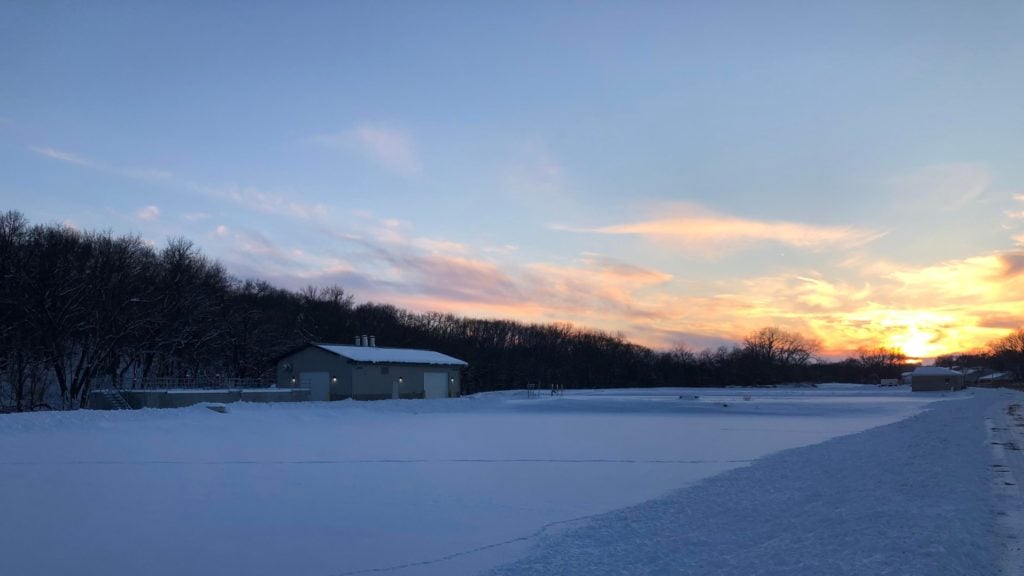
Zero ammonia, even below zero
100% ammonia removal through an Iowa winter, with air temperatures below zero.
Read the case study →
Over 40% saved on power and maintenance
A 2.7 MGD district replaced aging coarse bubble diffusers with Triplepoint aeration.
Read the case study →
Room for a dairy processor
LRAS let a 5,000-person town accept dairy wastewater with BOD up to 2,000 mg/L.
Read the case study →Lagoon solutions FAQ Frequently asked questions.
What are the most common wastewater lagoon problems?
Missed ammonia limits in cold weather, odors, sludge buildup, algae and low dissolved oxygen. Most trace back to four causes: oxygen, mixing, temperature and nutrients.
Can an existing lagoon meet stricter permit limits?
Usually, yes. Post-lagoon reactors such as NitrOx can meet low ammonia limits year-round, NitrOx+D adds total nitrogen removal, and tertiary filtration reaches phosphorus limits as low as 0.1 mg/L, all while keeping the existing lagoon.
Is it cheaper to upgrade a lagoon or build a mechanical plant?
Upgrading is almost always lower in capital, energy and staffing cost. Most lagoons can be expanded in the same footprint, by up to 10 times with LRAS.
How do I know what is wrong with my lagoon?
Start with dissolved oxygen readings at several depths, a sludge survey, and a winter and summer comparison of effluent ammonia, BOD and TSS. The symptom table on this page links common symptoms to their likely causes.
How fast can a lagoon get back into compliance?
Rental aeration and Mobile NitrOx ammonia treatment can be on site quickly, with Mobile NitrOx typically deploying in 1–4 weeks, while a permanent solution is designed.
Does Triplepoint guarantee results?
Yes. Every installation is backed by the Technology Performance Guarantee: if we say it will work, we make sure it does.
We're ready to help
Not sure what your lagoon needs?
Tell us your number of cells, flow and permit limits, or just describe the problem. A Triplepoint lagoon specialist will follow up with options, no obligation.
This site is protected by reCAPTCHA and the Google Privacy Policy and Terms of Service apply.