

On this page
- Why are lagoon ammonia limits getting stricter?
- How do lagoons remove ammonia?
- Why do lagoons miss ammonia limits in winter?
- What are the options to meet a lagoon ammonia limit?
- How does NitrOx remove ammonia in cold weather?
- Does it work? Lagoon ammonia removal results
- Where should you start?
- Frequently asked questions
Lagoons remove ammonia through nitrification, in which bacteria convert ammonia to nitrite and then nitrate. It works well in warm weather, but nitrification slows sharply once water drops below about 10°C (50°F), so many lagoons meet ammonia limits in summer and miss them in winter. The most reliable fix for low, year-round limits is a post-lagoon nitrification reactor, such as NitrOx, that keeps a large population of nitrifying bacteria working in cold water.
Key takeaways
- Ammonia limits are tightening because even dilute ammonia is toxic to fish; many permits now set separate summer and winter limits.
- Cold water is the main reason lagoons miss limits. Once DO is above 2 mg/L, more air rarely helps.
- Post-lagoon reactors with high-surface-area media keep the existing lagoon and can nitrify in water as cold as 0.2°C.
Why are lagoon ammonia limits getting stricter?
Ammonia is highly toxic to fish and other aquatic life even at low concentrations. The EPA’s 2013 aquatic life criteria for ammonia are more stringent than the earlier criteria, and as states adopt them, more lagoon permits carry ammonia limits for the first time or lower existing ones. Limits are usually seasonal. Benton, Missouri, for example, received limits of 1.2 mg/L in summer and 2.7 mg/L in winter.
How do lagoons remove ammonia?
Through nitrification: Nitrosomonas bacteria convert ammonia to nitrite, and Nitrobacter convert nitrite to nitrate. Nitrifiers are slow-growing and sensitive, so nitrification only works when these conditions are met:
| Condition | Target | Why it matters |
|---|---|---|
| Dissolved oxygen | At least 2 mg/L; 5 mg/L optimal | Nitrification uses 4.57 lb O2 per lb ammonia-N, about three times what BOD needs |
| BOD removed first | Below about 20–30 mg/L | BOD-eating bacteria outcompete nitrifiers |
| pH and alkalinity | pH 7.5–8.0; rates drop below 6.8 | Nitrification consumes about 7.1 mg/L alkalinity per mg/L ammonia-N |
| Water temperature | Best at 82–97°F; slows sharply below 50°F | Cold water is the most common reason lagoons stop nitrifying |
| Mixing and sludge | Sludge under 2 ft; no short-circuiting | Anaerobic sludge releases ammonia back into the water |
| Biomass | Enough surface for attached growth | More surface area grows more nitrifiers |
For operating tips on each condition, see 6 tips to remove ammonia from wastewater lagoons.
Why do lagoons miss ammonia limits in winter?
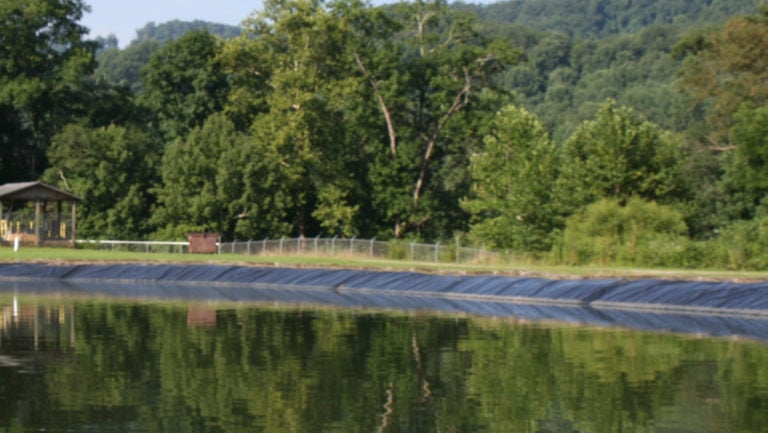
Lagoon water follows the air temperature. As it cools, nitrifying bacteria slow down and their population shrinks, so a lagoon that meets its limit in August can miss it from November through April. Adding air rarely fixes this: the bacteria are cold, not short of oxygen.
Winter also compounds other problems. Ice cuts off surface oxygen, sludge that built up over the summer keeps releasing ammonia, and short-circuiting reduces the time water spends in treatment.
What are the options to meet a lagoon ammonia limit?
| Option | Best for | Trade-offs |
|---|---|---|
| Optimize the existing lagoon (aeration, mixing, sludge, pH) | Seasonal limits or small exceedances | Rarely enough for low year-round limits in cold climates |
| Post-lagoon nitrification reactor (NitrOx) | Low year-round limits, including cold climates | Added equipment, but keeps the existing lagoon and uses a small footprint |
| In-lagoon media or a lagoon MBBR | Moderate limits | Performance drops in cold water; see lagoon MBBR |
| Covers or heat retention | Marginal winter shortfalls | Often cost-prohibitive for the gain |
| Replace with a mechanical plant | Sites that need a major expansion anyway | Much higher capital, energy and staffing costs |
| Rental treatment (Mobile NitrOx®) | Fast compliance, pilot testing or bypass | Rental cost; temporary |
How does NitrOx remove ammonia in cold weather?
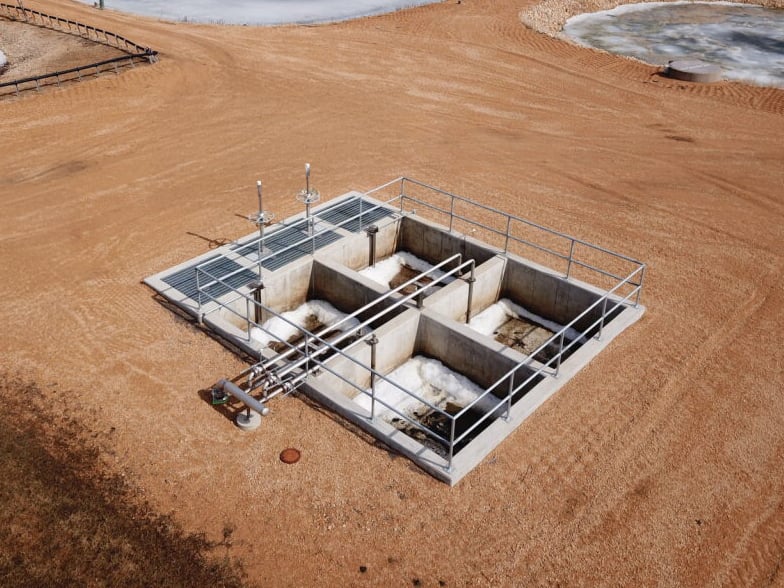
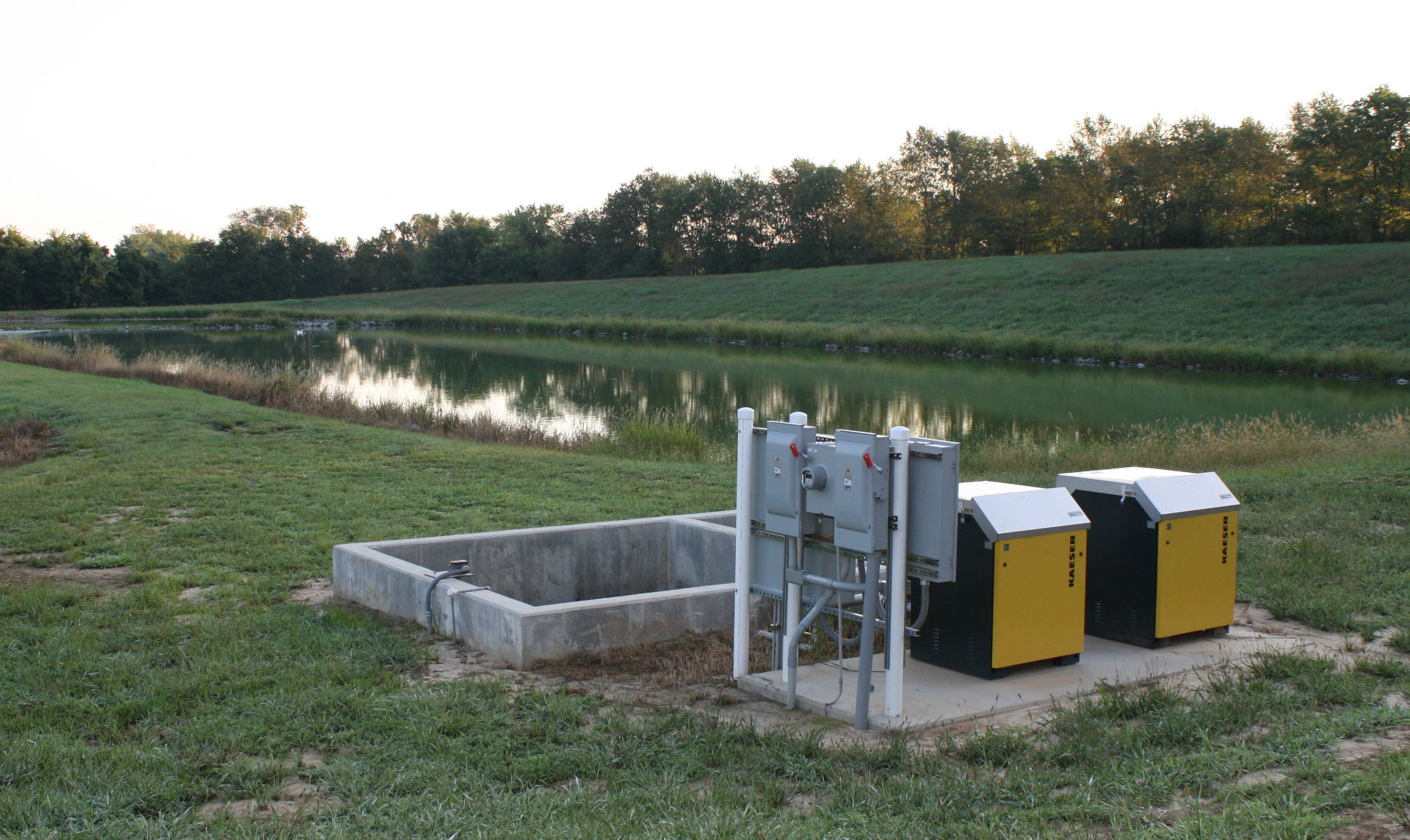
NitrOx is a nitrification reactor installed after the existing lagoon. The lagoon keeps doing what it does well, removing BOD, so the water reaching NitrOx is ready to nitrify. Inside, high-surface-area media give nitrifying bacteria far more surface to grow on than a lagoon, and more nitrifiers means more nitrification at low temperatures: a large enough population can nitrify in water as cold as 0.2°C.
- Small footprint. High-surface-area media keep reactors compact and media costs low.
- Efficient aeration and mixing. Ares aerators inside the tanks transfer up to 2.4% SOTE per foot and move 7,800 gpm each, with blowers onshore.
- Keeps the lagoon. No new basins, clarifiers or sludge handling.
- Total nitrogen too. Where permits limit total nitrogen, NitrOx®+D adds denitrification.
Does it work? Lagoon ammonia removal results
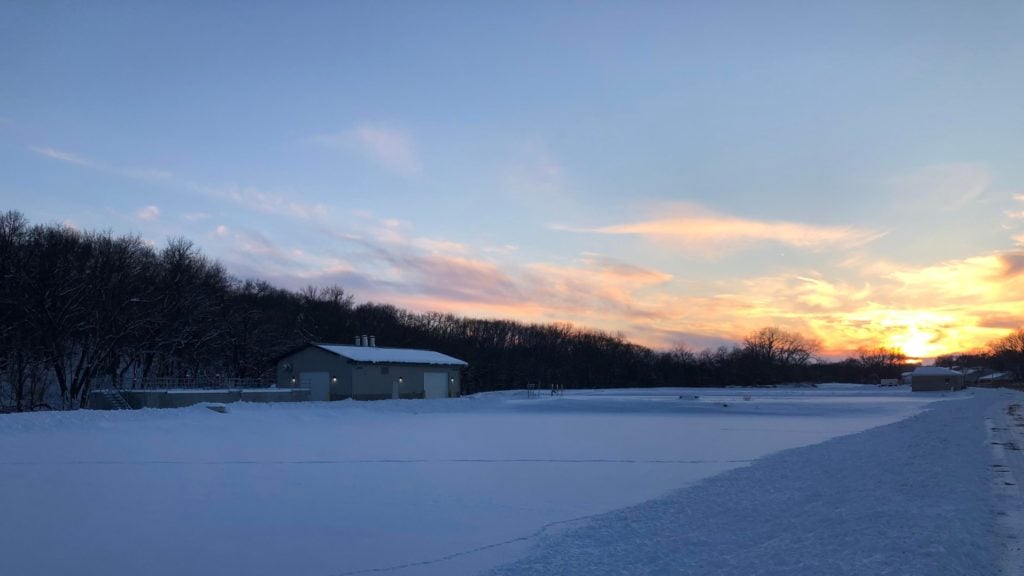
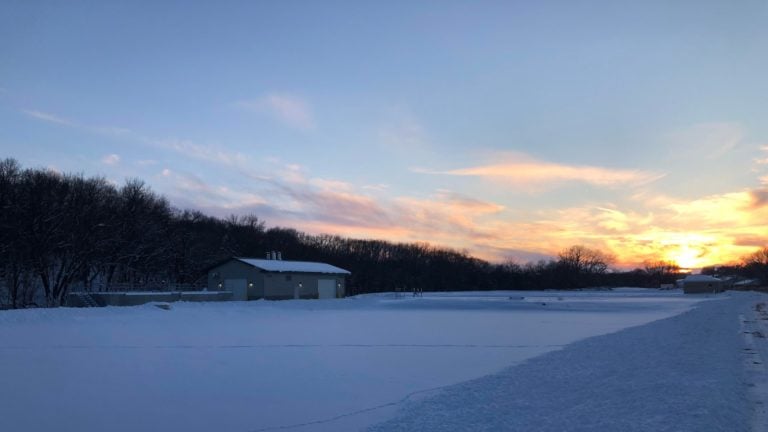
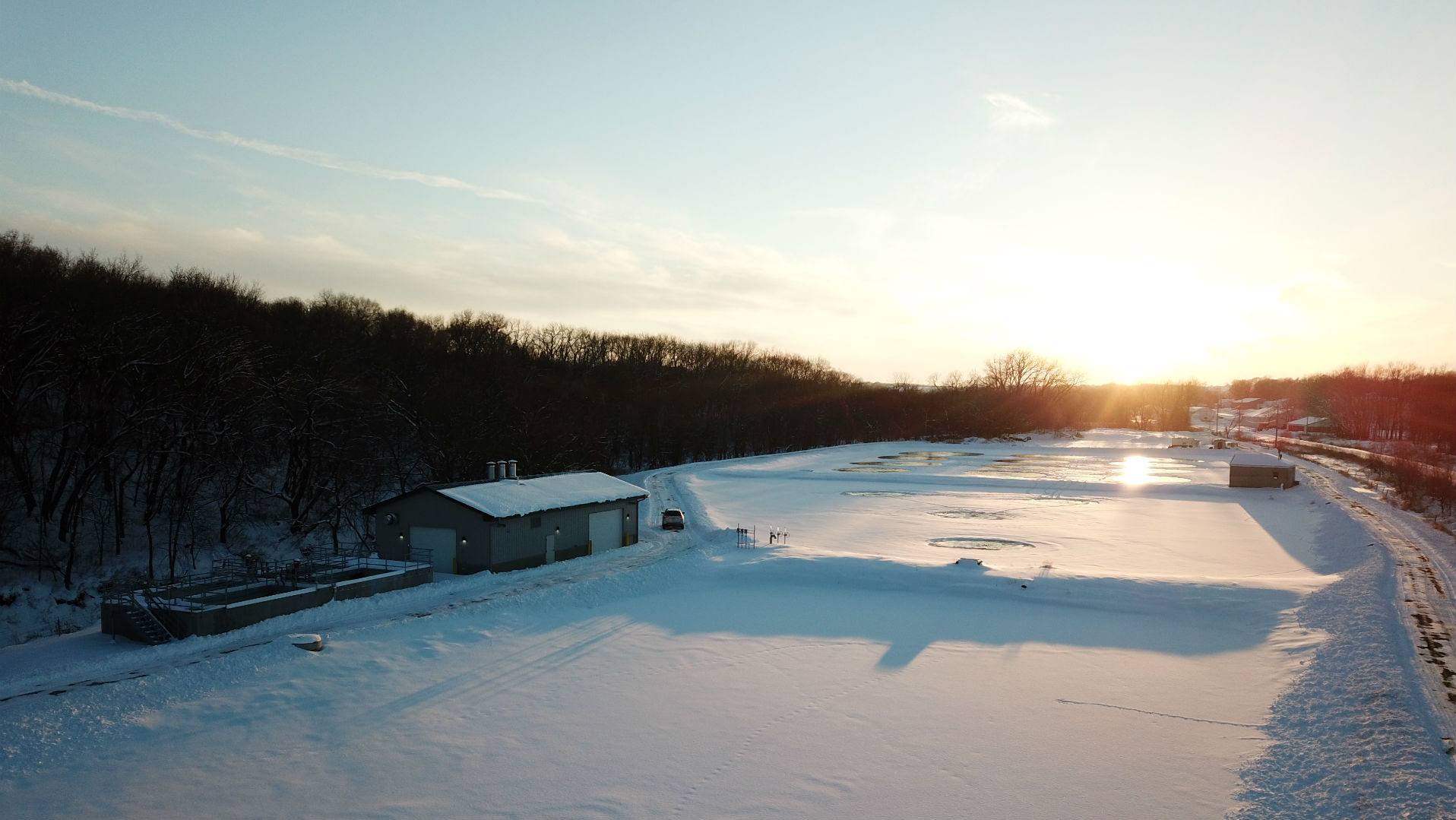
- De Soto, Iowa: after piloting NitrOx in 2017, the city removes 100% of ammonia through the winter, even during stretches of subzero temperatures, without heating the wastewater (featured in Treatment Plant Operator, October 2021).
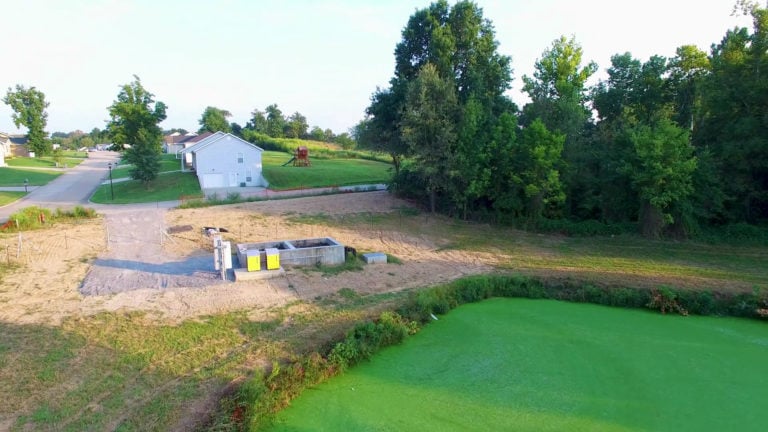
- Benton, Missouri: an 83,000 gpd three-cell lagoon added NitrOx to meet new seasonal ammonia limits after finding in-lagoon media and covers cost-prohibitive.
Where should you start?
- Confirm the limits and schedule in your permit or draft permit, including summer and winter values.
- Sample through a winter: influent and effluent ammonia, BOD, water temperature, pH and alkalinity.
- Survey sludge and check aeration, since both affect ammonia.
- Compare options on lifetime cost, not just capital.
- Pilot if you need proof. Rental systems let you demonstrate compliance before you commit.
Facing a new ammonia limit? Send us your permit limits and effluent data, and we’ll show you what it takes to meet them year-round.
Sources: U.S. EPA, Aquatic Life Criteria – Ammonia (2013 freshwater criteria); Metcalf & Eddy, Wastewater Engineering: Treatment and Resource Recovery; U.S. EPA, Principles of Design and Operations of Wastewater Treatment Pond Systems (2011); “Getting to Zero Ammonia,” Treatment Plant Operator, October 2021.