

On this page
Lagoon odors almost always come from a lack of oxygen. When dissolved oxygen runs out, bacteria digest waste anaerobically and release hydrogen sulfide and other odorous gases. The most common causes are low dissolved oxygen, sludge buildup, spring and fall turnover, and overloading from high-strength waste. Adequate aeration and mixing stop most lagoon odors, often quickly, because aerobic bacteria produce odorless carbon dioxide instead.
Key takeaways
- A healthy wastewater lagoon is virtually odorless, with clear water.
- A rotten-egg smell means hydrogen sulfide from anaerobic conditions: low DO, sludge or overloading.
- Spring turnover can demand up to 5–6 lb of oxygen per lb of BOD, about triple normal, which is why odors flare when ice melts.
What does each lagoon smell mean?
| Smell | What you may see | Likely cause |
|---|---|---|
| Faint pond smell, or none | Clear blue, brown or green-tinged water | Healthy lagoon |
| Earthy or grassy | Pea-soup green water or green streaks | Heavy algae growth; may raise TSS and BOD |
| Fishy | Blue-green scum | Blue-green algae (cyanobacteria) |
| Rotten eggs (sulfur) | Dull gray water, floating sludge mats | Low DO, anaerobic digestion, excess sludge |
| Sulfur with red or pink water | Pink or red tint | Purple sulfur bacteria from organic overloading |
| Septic | Black water | Severe overloading or septic conditions |
Adapted from the EPA pond operations guide. More detail: What lagoon odors tell you.
What causes lagoon odors?
- Low dissolved oxygen from broken, undersized or poorly placed aeration.
- Seasonal turnover. In spring and fall the water column mixes, stirring up sludge and releasing gases. See lagoon turnover.
- Sludge buildup that digests anaerobically and releases sulfide gas and floating sludge.
- Overloading from high-strength waste, often industrial, or growth beyond design capacity.

Why do lagoons smell worse in spring?
Over winter, solids settle and an ice cap seals the lagoon. As the ice melts and the water warms, dormant bacteria wake up and start consuming the BOD that built up over winter, which can require as much as 5–6 lb of oxygen per lb of influent BOD, roughly triple the usual demand. When that oxygen runs out, sulfide gases escape. See spring lagoon odors.
How do you stop lagoon odors?
- Measure DO at several depths and times of day. Below 2 mg/L, oxygen is the problem.
- Fix or add aeration so DO stays above 2 mg/L through the water column.
- Mix the whole lagoon to prevent stratification and turnover.
- Reduce the sludge blanket. Mixing and oxygen can digest it in place. See lagoon sludge reduction.
- Check loading from industrial or seasonal sources, and plan for spring demand.
Solar and wind circulators are popular, but they rarely provide enough mixing to break stratification or prevent turnover. For a diagnostic walkthrough, see Smelly lagoon? Diagnosing and correcting lagoon odors.
How does aeration stop lagoon odor?
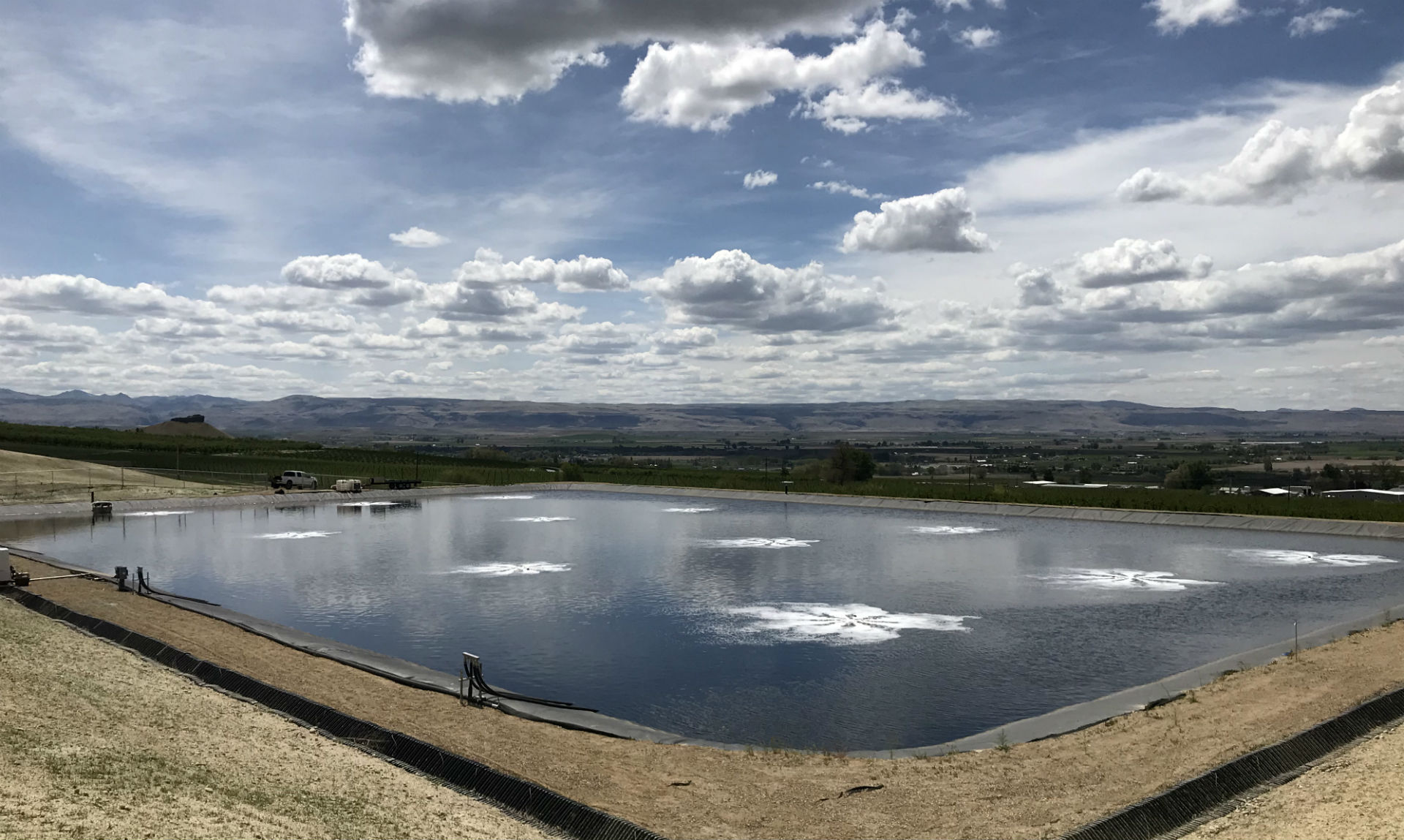
Aeration promotes aerobic bacteria, which break down organic matter into odorless carbon dioxide and water. Oxygen in the water column also oxidizes odorous gases before they reach the surface, and mixing destratifies the lagoon to prevent turnover and digest sludge. In the Ste. Chapelle winery case study, adding Triplepoint fine bubble aeration solved a winery pond odor problem caused by low dissolved oxygen.
Odor complaints? Tell us when the odors happen and what you see, and we’ll pinpoint the cause.
Sources: U.S. EPA, Principles of Design and Operations of Wastewater Treatment Pond Systems (2011); S. Harris, Wastewater Lagoon Troubleshooting: An Operator’s Guide; Triplepoint case studies.