Need ammonia treatment fast? Mobile NitrOx is ready to roll
An Axius Water company (800) 654-9307

Home / Solutions / Lagoon Total Nitrogen

Lagoon total nitrogen removal Lagoon Total Nitrogen Removal: Nitrification and Denitrification

Some lagoons now have total nitrogen or nitrate limits. How lagoons remove nitrogen, why it fails in cold weather, and how to meet TN limits year-round.

Updated · Triplepoint engineering team

0.2°Ccoldest water NitrOx® nitrifies in
<0.5 mg/LDO for denitrification
900 m²media surface per m³
Same lagoonreactors install after it
On this page
  1. Why are lagoons getting total nitrogen limits?
  2. What is the difference between ammonia, TIN and total nitrogen?
  3. How does nitrogen removal work?
  4. Why do lagoons struggle to meet total nitrogen limits?
  5. How does NitrOx+D remove total nitrogen?
  6. Frequently asked questions

Removing total nitrogen (TN) from wastewater takes two biological steps. First, nitrification converts ammonia to nitrate in an aerobic environment. Then denitrification converts nitrate to nitrogen gas in an anoxic environment, with little or no dissolved oxygen and a carbon source. Lagoons often nitrify in summer but rarely denitrify reliably, and both steps slow in cold water, so meeting a TN limit year-round usually requires a post-lagoon reactor such as NitrOx+D.

Key takeaways

  • Total nitrogen = ammonia + nitrite + nitrate + organic nitrogen. Meeting an ammonia limit does not meet a TN limit.
  • Nitrification needs oxygen and low BOD; denitrification needs the opposite: DO under about 0.5 mg/L and a carbon source.
  • Below about 10°C, lagoon nitrification drops off; growing more nitrifiers and denitrifiers on media overcomes it.

Why are lagoons getting total nitrogen limits?

Most lagoon permits limit only ammonia, which is toxic to fish. But nitrate is also a nutrient that drives eutrophication, and nitrate in drinking water can cause methemoglobinemia (“blue baby syndrome”). Facilities that discharge to impaired waters or to groundwater, directly or through land application, increasingly receive limits on total nitrogen (TN), total inorganic nitrogen (TIN) or nitrate.

What is the difference between ammonia, TIN and total nitrogen?

MeasureIncludesRemoved by
Ammonia-NNH3 + NH4+Nitrification
Total inorganic nitrogen (TIN)Ammonia + nitrite (NO2) + nitrate (NO3)Nitrification + denitrification
Total nitrogen (TN)TIN + organic nitrogenNitrification + denitrification, plus solids removal

More: Lagoon nitrogen vs. lagoon ammonia: what’s the difference?.

How does nitrogen removal work?

  1. Remove BOD. BOD has to drop to about 20–30 mg/L so nitrifying bacteria are not outcompeted.
  2. Nitrify. In aerobic conditions (DO up to about 5 mg/L), Nitrosomonas convert ammonia to nitrite and Nitrobacter convert nitrite to nitrate.
  3. Denitrify. In anoxic conditions (DO under about 0.5 mg/L), heterotrophic bacteria use the oxygen in nitrate and release nitrogen gas. They need a carbon source (BOD) to do it.

Why do lagoons struggle to meet total nitrogen limits?

Temperature and control. Lagoon water follows the air temperature, and once it drops below about 10°C, nitrification falls off and ammonia rises, so there is less nitrate to denitrify, and denitrification slows too. Lagoons also cannot easily provide separate aerobic and anoxic zones or the right amount of carbon at the right time. See lagoon ammonia removal for the nitrification side.

How does NitrOx+D remove total nitrogen?

NitrOx+D adds a denitrification reactor after NitrOx nitrification, after the existing lagoon has removed BOD.

  • More bacteria, colder water. Nitrifiers and denitrifiers grow attached to high-surface-area media; a large enough population of nitrifiers can nitrify in water as cold as 0.2°C.
  • Efficient aeration and mixing in the nitrification reactors, with Ares aerators transferring up to 2.4% SOTE per foot and moving 7,800 gpm each.
  • Controlled denitrification. Nitrate is monitored in the reactor, a carbon feed supplies precise BOD for denitrifiers, and a mixer keeps bacteria and carbon in contact.
  • Keeps the lagoon. The reactors fit beside the existing lagoon in a small footprint.
Process diagram of NitrOx+D: lagoon BOD removal, NitrOx nitrification reactors, NitrOx+D denitrification reactor and polishing
NitrOx+D: the lagoon removes BOD, NitrOx nitrifies and NitrOx+D denitrifies.

Facing a total nitrogen or nitrate limit? Send us your permit and effluent data, and we’ll show you what it takes to meet it year-round.

Sources: Metcalf & Eddy, Wastewater Engineering: Treatment and Resource Recovery; U.S. EPA, Principles of Design and Operations of Wastewater Treatment Pond Systems (2011); Triplepoint field data.

Nitrification + denitrification NitrOx+D: total nitrogen limits, year-round.

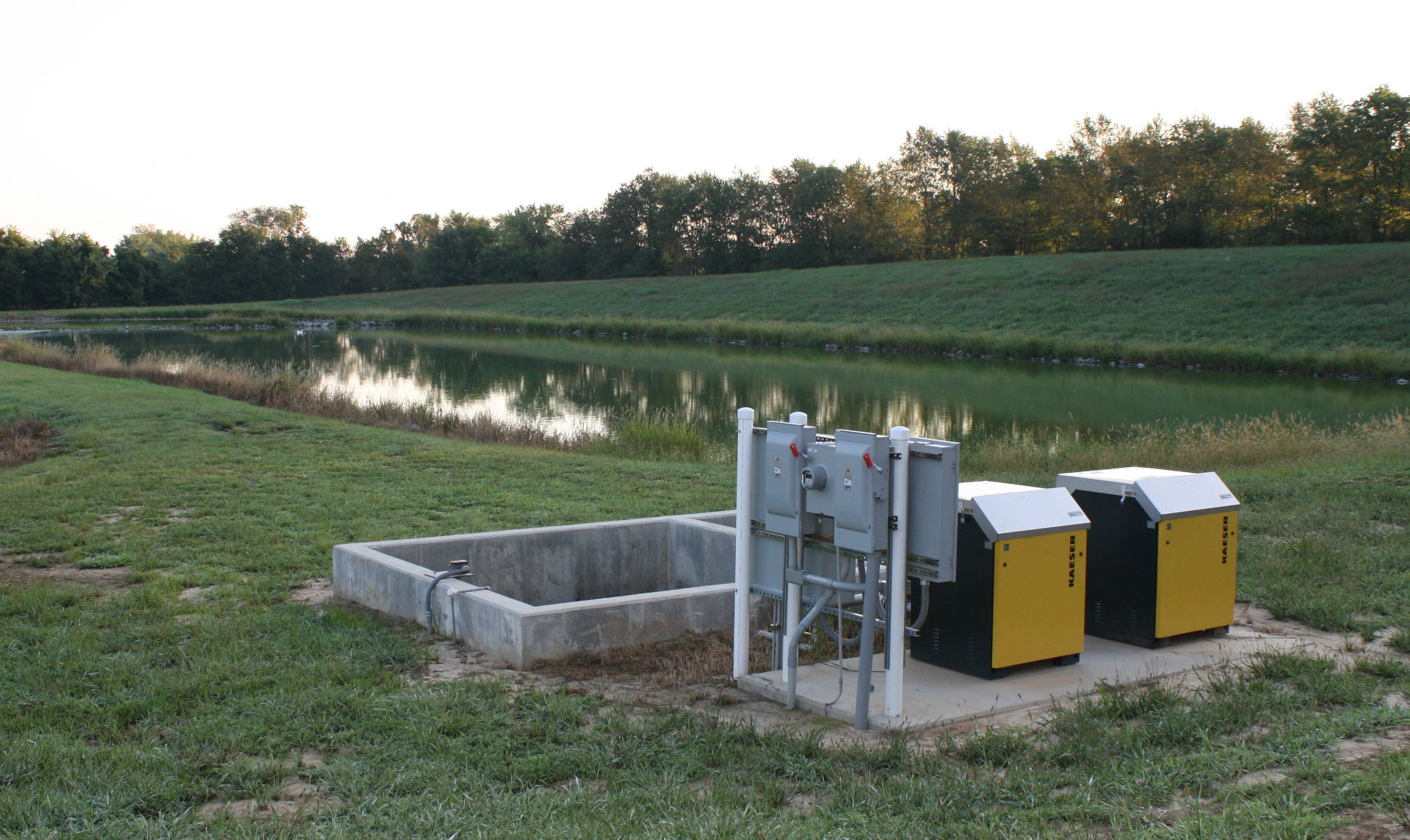
NitrOx reactors nitrify on high-surface-area media, then the NitrOx+D reactor denitrifies with nitrate monitoring, a precise carbon feed and robust mixing, all after your existing lagoon.

0.2°Cnitrification
Carbon feedfor denitrification
Nitratemonitored in the reactor
Smallfootprint
Process diagram of NitrOx+D nitrification and denitrification after a lagoon

Free download

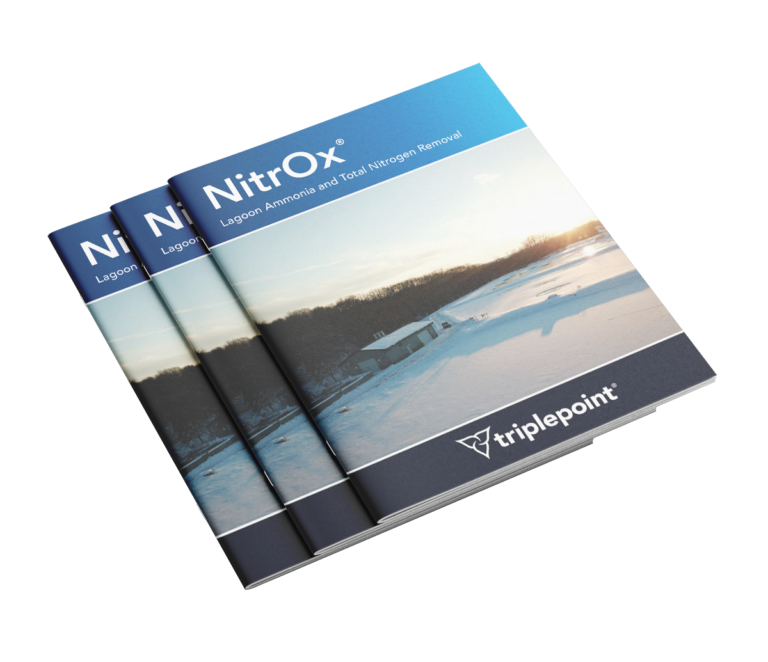
Download the NitrOx brochure.

Learn how small-footprint NitrOx works within existing infrastructure to cost-effectively meet low ammonia limits year round, no matter how cold it gets.

NitrOx® brochure
We Say It, We Do It guarantee

Proven performance. Guaranteed results.

We say it. We do it.

We back every system with our Technology Performance Guarantee: if we say it will work, we make sure it does. From first design to final install, we stand behind our process, our products and our people.

Need results fast?

Rental treatment on site, fast.

Turnkey rental aeration and ammonia removal systems can be on site quickly to get your lagoon back into compliance. Up to 75% of six months' rent is credited toward a permanent system.

Lagoon Total Nitrogen FAQ Frequently asked questions.

How do you remove total nitrogen from wastewater?

With nitrification, which converts ammonia to nitrate in aerobic conditions, followed by denitrification, which converts nitrate to nitrogen gas in anoxic conditions using a carbon source.

Can a lagoon remove total nitrogen?

Lagoons can nitrify in warm weather, but they rarely denitrify reliably and both steps slow in cold water. Meeting a TN limit year-round usually takes a post-lagoon nitrification and denitrification reactor.

What DO is needed for denitrification?

Very little: typically below about 0.5 mg/L. Denitrifying bacteria use the oxygen bound in nitrate instead of dissolved oxygen.

Why does denitrification need a carbon source?

Denitrifying bacteria are heterotrophs that need BOD (carbon) for energy. After a lagoon removes most BOD, a controlled carbon feed provides it.

Does meeting an ammonia limit meet a total nitrogen limit?

No. Nitrification turns ammonia into nitrate, which still counts toward total nitrogen. Denitrification is needed to remove it.

Why is nitrate a concern?

Nitrate fuels algae growth in receiving waters, and in drinking water it can cause methemoglobinemia (“blue baby syndrome”).

We're ready to help

Facing a total nitrogen limit?

Tell us your number of cells, flow and nitrogen limits, and we’ll show you what it takes to meet them year-round.

(800) 654-9307 info@lagoons.com 12600 E. Arapahoe Rd. #100, Centennial, CO 80112