

What Is a Facultative Lagoon?
A facultative lagoon is a shallow, unmixed wastewater pond that treats sewage in three layers: an aerobic top layer oxygenated by algae and wind, an anaerobic bottom layer that digests settled sludge, and an anoxic middle zone where facultative bacteria work with or without free oxygen.
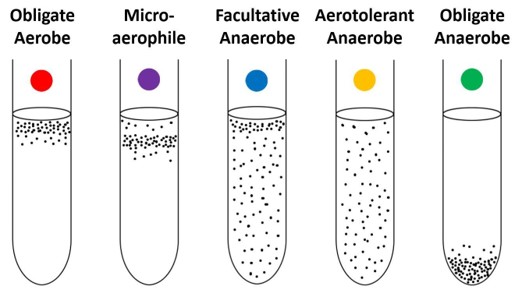
This diagram comes from Julie Hartwig’s Lagoon Microbiology webinar. Bacteria that require oxygen (obligate aerobes) cluster at the top, where the oxygen is. Bacteria that can’t tolerate oxygen (obligate anaerobes) settle at the bottom. Facultative bacteria are spread throughout, slightly denser near the top because they work most efficiently with oxygen.
A facultative lagoon develops the same layering, and that layering is what makes it work.
How a Facultative Lagoon Works
A facultative lagoon works like a large, slow clarifier. Heavier solids sink to the bottom and are digested anaerobically. Lighter solids stay in the water column and are treated aerobically. These lagoons are intentionally left unmixed and unaerated, because mixing would destroy the layers that make treatment possible.
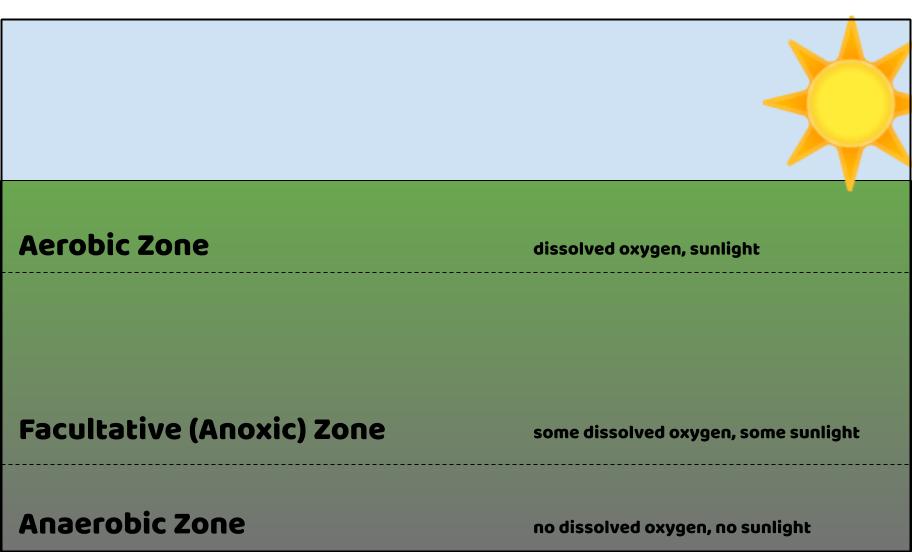
Aerobic Zone (Top 1–2 Feet)
Algae and wind supply dissolved oxygen here. This zone does most of the BOD and nutrient removal.
Anoxic (Facultative) Zone
Oxygen here exists only in compounds like nitrate, nitrite, and sulfite. This middle zone removes the odor-causing sulfur compounds produced below and adds some BOD and nutrient removal.
Anaerobic Zone (Bottom)
Settled sludge is stored and slowly digested here, and metals and nutrients are trapped.
Why Facultative Lagoons Struggle With Ammonia
Facultative lagoons are shallow (4–8 feet) and large, which gives algae and wind plenty of surface area to supply oxygen. Detention times often exceed 120 days. That long, passive treatment handles BOD well, but the EPA describes these systems as only partially reliable. They can’t consistently meet low ammonia limits, especially in winter, when cold water slows the nitrifying bacteria that remove ammonia.
Case Study: Benton Facultative Lagoon Ammonia Removal
Facultative lagoon systems are common for wastewater treatment in small communities. In areas with inexpensive available land, this type of facility offers low operational and maintenance requirements and reliable treatment. However, new ammonia limits have put many communities in danger of noncompliance.
A small town upgraded their facultative lagoon system to meet Missouri’s new ammonia effluent limits. Watch the case study and read below for details.
This video case study was shot with a 360° camera—watch it with VR goggles for an immersive experience, or simply use your finger or mouse to rotate the view.
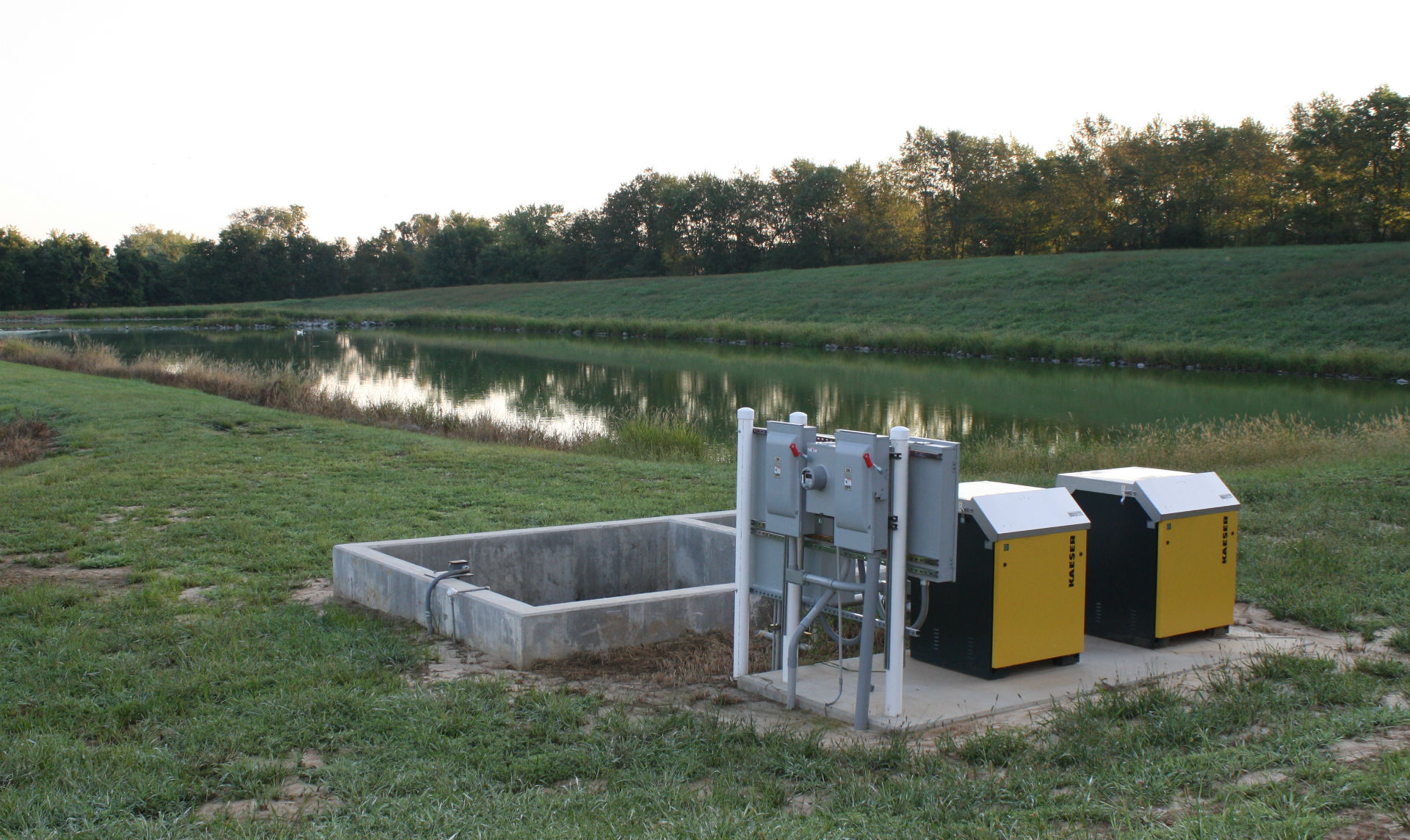
Benton, Missouri, is a small town of 900 in the southeast corner of the state, just a few miles south of Cape Girardeau. Their wastewater is treated by a three-cell facultative lagoon system: two main lagoons separated by a berm with one lagoon divided into two cells. The lagoon system has an average flow of 83,000 gallons per day.
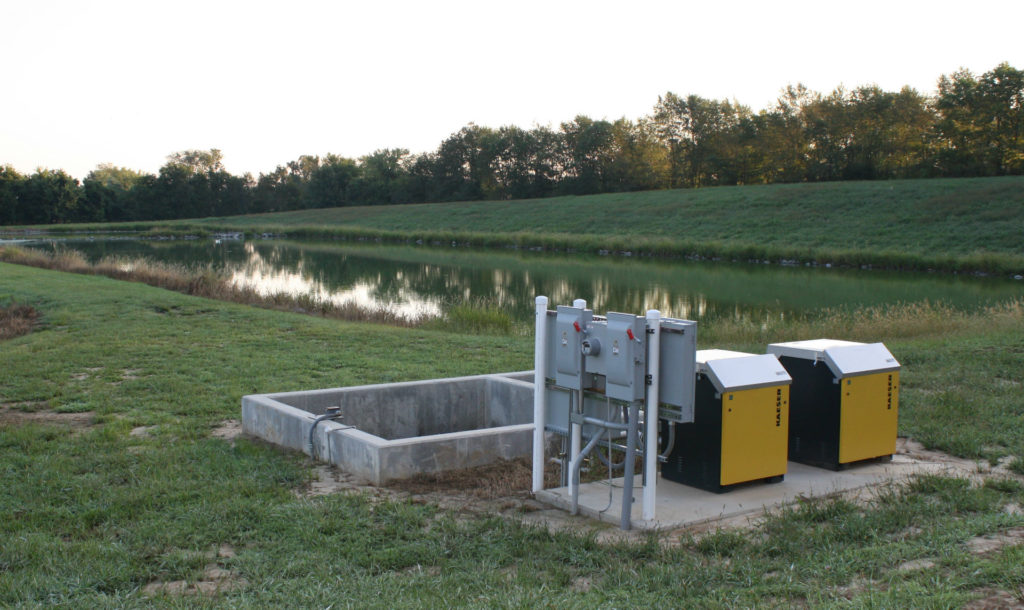
Like many Missouri municipalities, Benton was faced with new ammonia limits—1.2 mg/L in summer and 2.7 mg/L in winter—which went into effect in October 2019. Although otherwise providing adequate treatment, the lagoon system would be unable to meet these new limits, especially during the winter, when cold temperatures inhibit nitrifying bacteria.
Because Benton’s facultative lagoon system was providing adequate BOD treatment, it wasn’t necessary to add mechanical aeration to reduce BOD enough for nitrification.
The Solution: Triplepoint’s NitrOx®
Benton considered other technologies for lagoon ammonia removal, including in-lagoon media and covers for heat retention, but found them to be cost prohibitive. They opted instead for Triplepoint’s NitrOx System because:
- It is based on proven technologies—with decades of research studies and thousands of successful installations around the world.
- It is 2/3 the cost of available alternatives. Capital costs are lower because it integrates into the existing process rather than replacing it and only takes up a small footprint, which negates the need for additional land.
- It would preserve the ease of operation and low maintenance that Benton’s existing lagoon system provides. It is simple to operate, automated, self-cleaning, and flexible.
- Treatment would not be disrupted, because the lagoons wouldn’t need to be taken off-line for installation.
- It offers controlled, reliable nitrification: Because influent temperature is thermally regulated only when needed, energy costs are minimized.
NitrOx Small Footprint

The NitrOx Reactor was installed between Cells 1 and 2. After BOD treatment, effluent from Cell 1 is gravity-fed to the NitrOx; flow is then returned to Cell 2 for polishing. Unlike other lagoon ammonia removal technologies, NitrOx has a small footprint and tucks into the existing site.
To provide year round nitrification, a lagoon ammonia removal process must account for cold temperatures, because nitrifying bacteria are sensitive to cold. Other lagoon ammonia removal options compensate by increasing biomass—adding an additional lagoon cell filled with carrier media to encourage the growth of nitrifying bacteria.
Triplepoint’s patented NitrOx Lagoon Ammonia Reactor solves the temperature issue by heating the influent, only when needed and just enough to ensure biological nitrification. Because the temperature increase is minor, to a target between 36.5 and 41° F, and is only required a few months per year, energy costs are kept to a minimum. Temperature is regulated automatically, too, preserving the ease of operation of the lagoon system.
By choosing NitrOx, Benton did not have to purchase additional land or media, and would be assured of year round ammonia removal to meet their permit.
Learn more about Triplepoint’s NitrOx for Facultative Lagoon Ammonia Removal
For more information about NitrOx and how it works, visit our NitrOx page and download the NitrOx brochure.