






Can Barley Straw Really Prevent Lagoon Algae Growth? How Does it Work?
Barley straw is a time-tested, low-cost method for reducing nuisance algae in wastewater lagoons, ponds, and other surface water bodies. While it may sound like folk science, there’s real research behind how it works—and when applied correctly, it can be a useful tool for operators to maintain lagoon performance and aesthetics.
How Barley Straw Works to Reduce Algae
When barley straw is submerged in water, it begins to slowly decompose. This decomposition releases natural compounds—primarily phenolic substances—that inhibit algal growth. The exact mechanism is still not fully understood, but it’s believed that as microbes break down the straw, these byproducts either:
- Directly suppress the growth of certain algae,
- Alter the water chemistry to make conditions less favorable for algal blooms, or
- Encourage beneficial microbial competition that reduces available nutrients for algae.
Importantly, barley straw prevents new algal growth rather than killing existing blooms, so timing is key to success.
✅ Research-backed: Studies from the UK’s Centre for Ecology & Hydrology confirmed barley straw’s algistatic effect in various water bodies (CEH Report, 2001) and the U.S. Department of Agriculture (USDA) has published guidance validating its use in wastewater applications (USDA 2000).
When to Install Barley Straw in a Lagoon
Barley straw should be installed before algae season begins, typically early spring (March–April in most of North America), when water temperatures reach around 50° F (10° C). It takes 4 to 6 weeks for the straw to begin releasing active compounds, so installing it early gives the lagoon a chance to build up the algistatic effect before algae typically bloom in late spring and summer.
For seasonal control:
- Install in early spring, then replace in mid-summer if needed
- Each application typically lasts 4–6 months, depending on temperature and decomposition rates
How to Install Barley Straw in a Wastewater Lagoon
Follow these general steps for effective application:
- Obtain clean, dry barley straw. Avoid moldy or seed-laden straw.
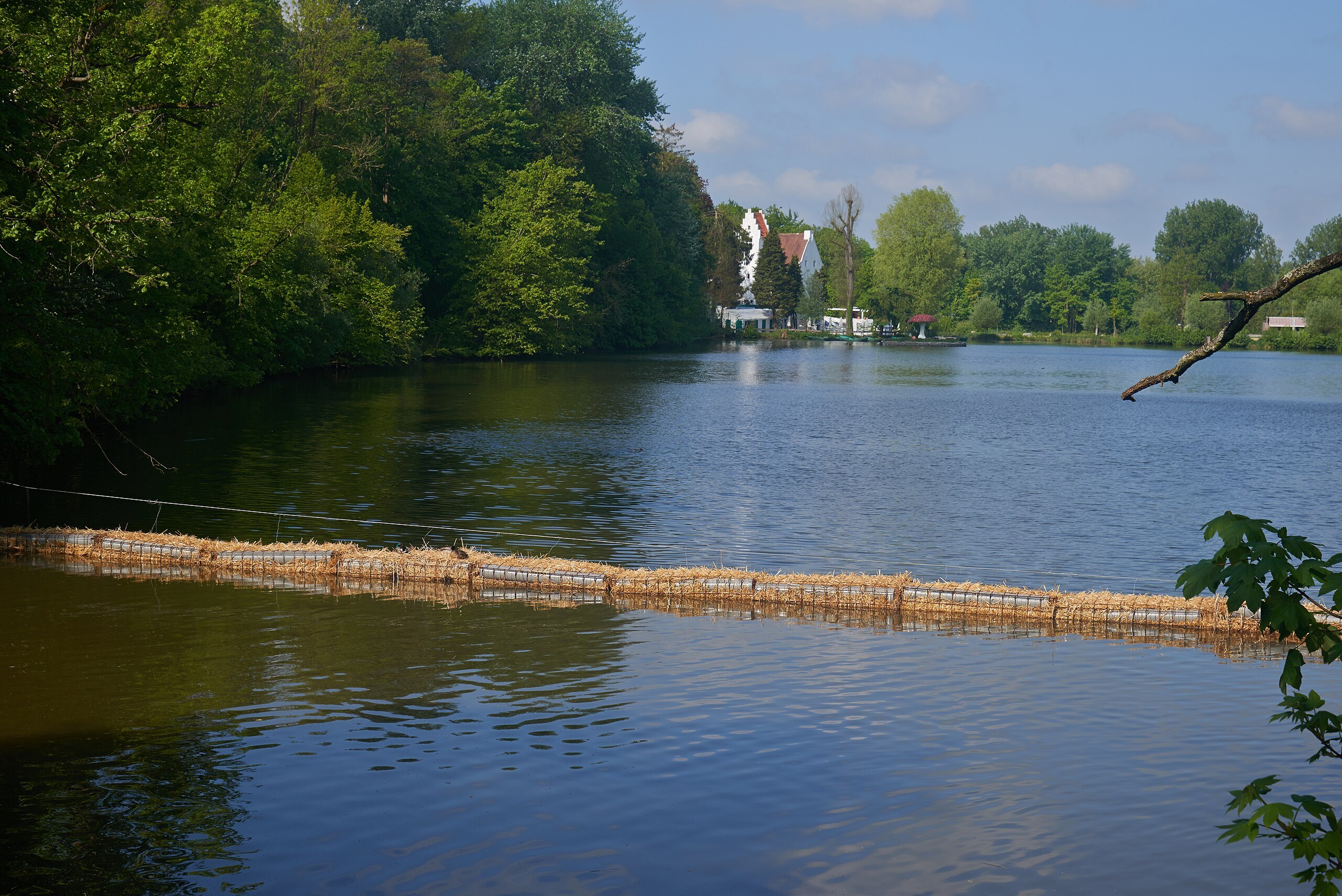
- Pack it loosely in mesh bags or cages. This allows water circulation and microbial access.
- Use flotation devices or suspend the bundles. Keep them just below the surface for maximum effectiveness and to avoid floating clumps.
- Space the bundles evenly. Use roughly 225–450 pounds per surface acre of lagoon water, depending on severity of past algae issues.
- Anchor them. Tether bundles to a post, aerator, or shoreline so they don’t drift into intakes or structures.
📏 Application rate reference: 10–25 grams per square meter, or roughly 5–10 bales per acre. (USDA WQL-26)
Considerations and Limitations
- Barley straw doesn’t kill existing algae. It’s a preventative measure, not a cure.
- It’s more effective in well-oxygenated water. Aerated lagoons may see better results.
- Water temperature matters. Decomposition is slower in cold water, so spring installation is key.
- Avoid overapplication. Excessive straw can add unwanted organic load to the lagoon.
Conclusion
Barley straw is a simple, cost-effective method to suppress algae growth in wastewater lagoons. While not a silver bullet, when used proactively and in conjunction with proper aeration and sludge management, it can support clearer, better-performing lagoons with minimal investment.
For operators facing recurring seasonal algae issues, barley straw may be worth adding to your spring maintenance checklist.